System 48
Text size

Menu

City of Smederevo , home page

Site search

Landmarks and tourism

Trg Republike

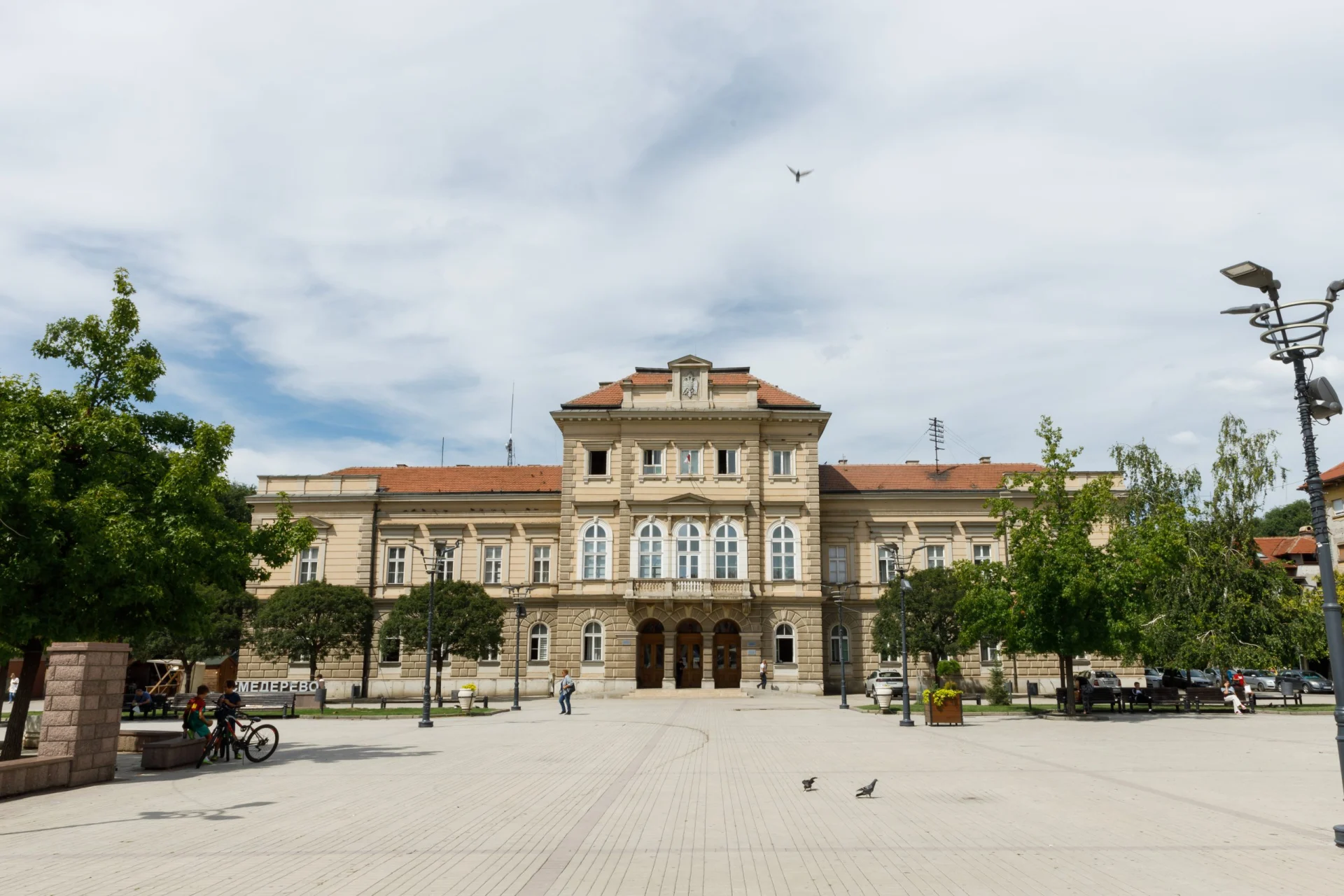
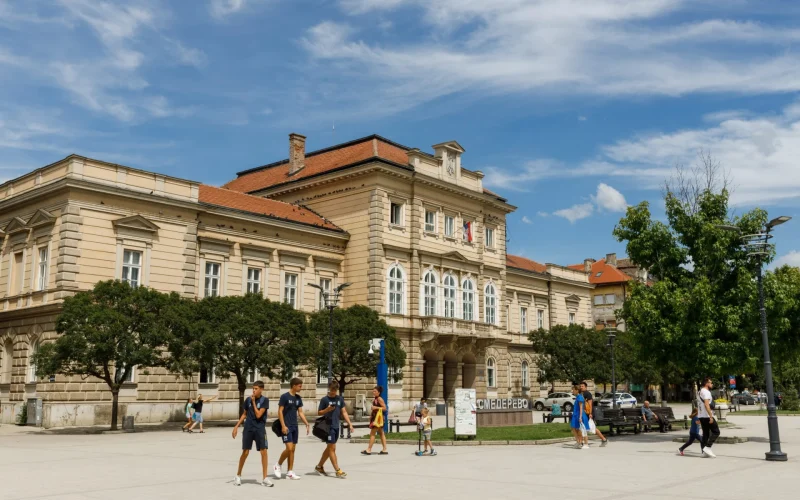
Trg Republike is the historical and urban heart of Smederevo and one of the city's most important townscape ensembles.

Open on the city map

Its distinctive triangular shape, long historical continuity and the imposing buildings that surround it bear witness to the development of Smederevo from a former market town into a modern city centre.

Within a relatively small area, different layers of the city’s history meet, from the heritage of the nineteenth century and monumental public and religious buildings to the architecture of the period between the two world wars and contemporary public space. For this reason, Trg Republike is not only the geographical centre of the city but also one of the places where the development of Smederevo can best be traced.

From the Great Market to the city centre

The area of today’s Trg Republike began to take shape in the first half of the nineteenth century, after the Second Serbian Uprising, on the site of the former Great Market, an important place of trade, encounters and everyday life in the town. The official tourism website of Smederevo identifies this very area as the historical core of today’s main city square.

One of the most significant changes came in the nineteenth century, when imposing buildings that would define the square’s future appearance began to rise around it.

A particularly dominant feature of the space is the Church of St George the Great Martyr, built between 1850 and 1854. With its monumental scale, position and architecture, the church has become one of the most recognisable symbols of the square and of the whole of Smederevo.

The District Prefecture building: one of the most important on the square

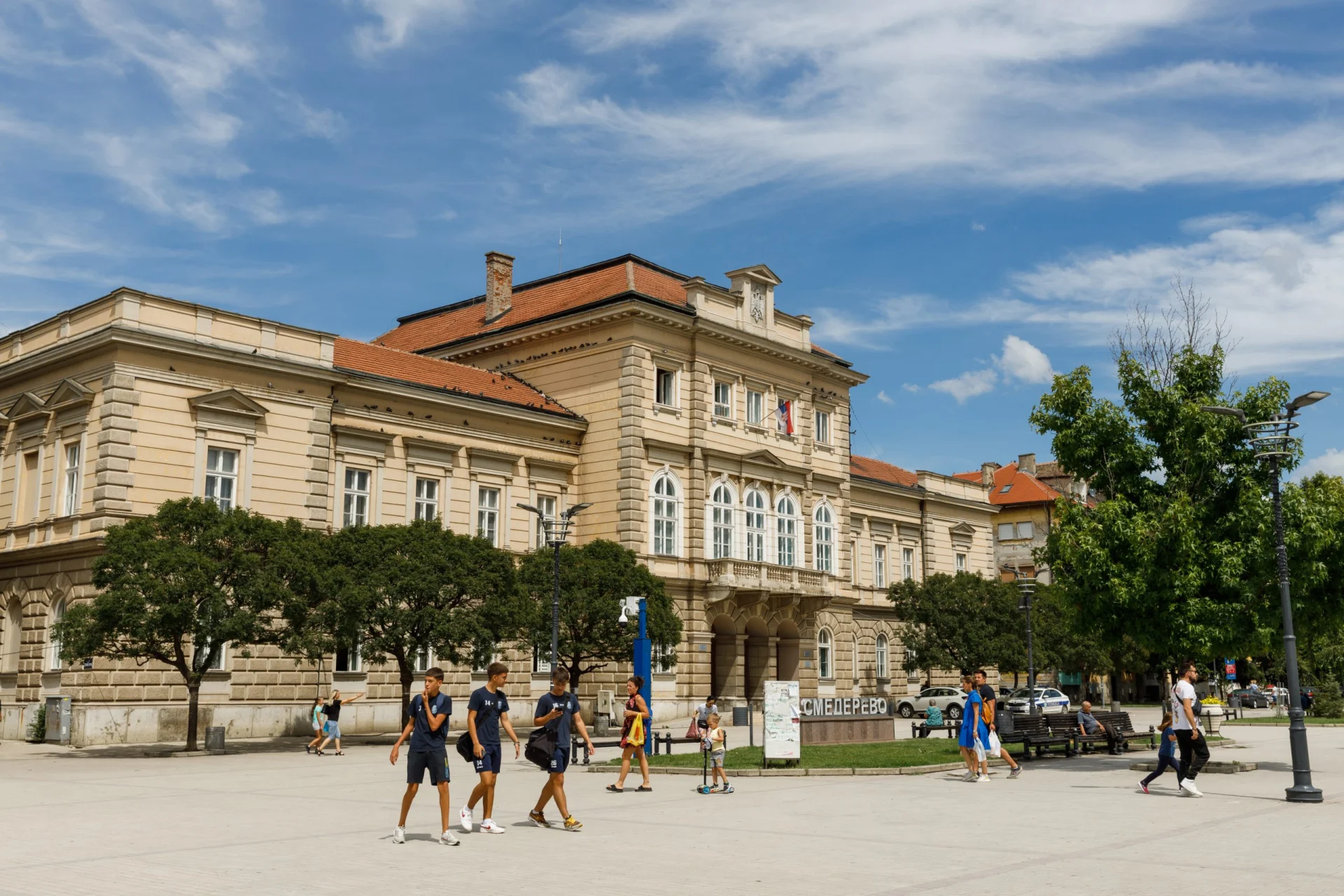
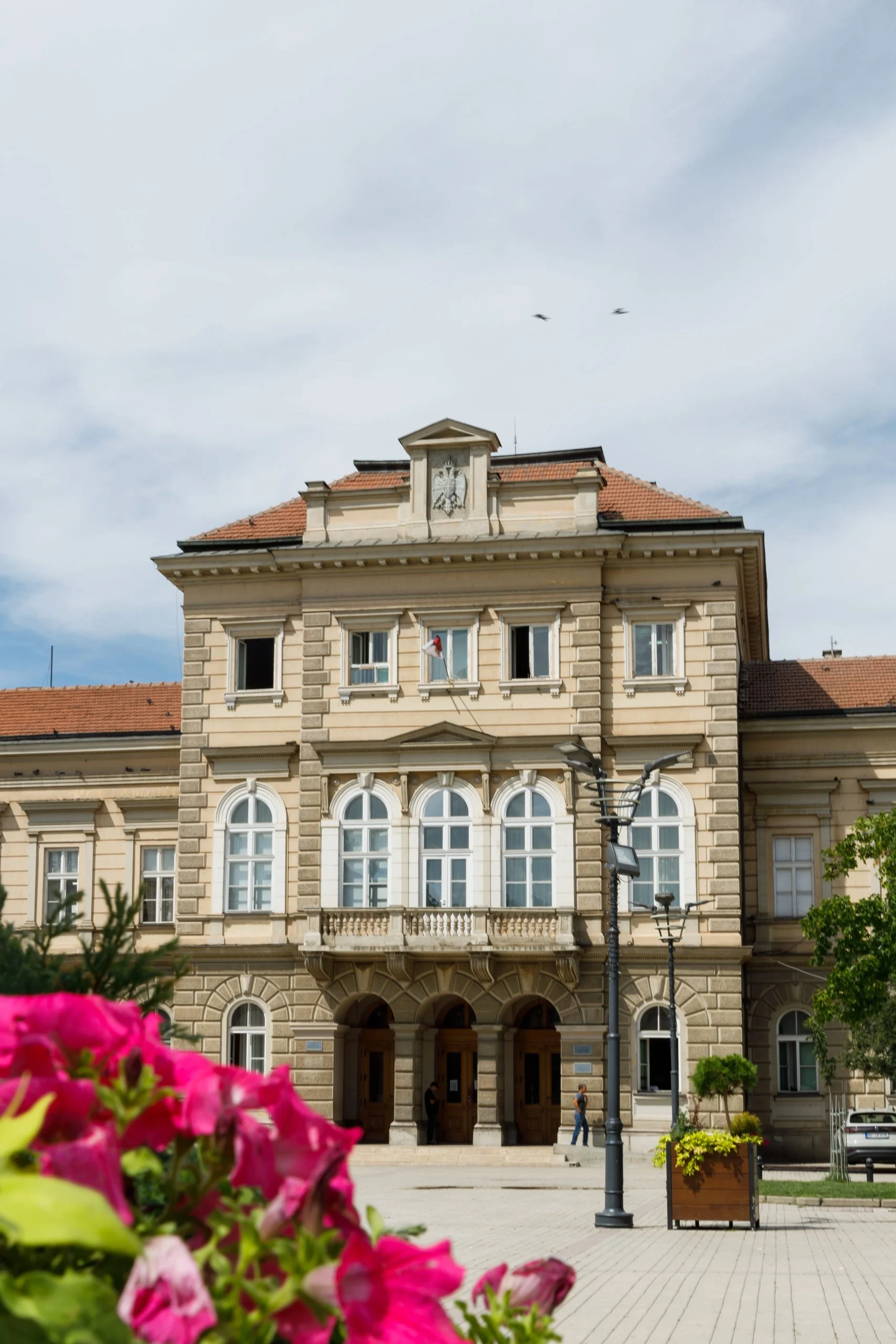
A special place in the architectural ensemble of Trg Republike belongs to the monumental former District Prefecture building, erected between 1886 and 1888 on the site of the older building of the Ispravničestvo (the district chief’s office).

It was designed by Aleksandar Bugarski, one of the most important Serbian architects of the nineteenth century. The Regional Institute for the Protection of Cultural Monuments Smederevo singles out this building as one of the finest achievements of its kind in Serbia. It was declared a cultural monument in 1981, and in 1983 it was designated a cultural property of great importance.

Its position and imposing architecture contributed significantly to the transformation of the former market area into the administrative and urban centre of the city. The building still has a public function today and is one of the main architectural landmarks of Trg Republike.

From a bazaar square to a modern city centre

The central urban area underwent a particularly significant transformation during the first half of the twentieth century.

In her work “The Architecture of Smederevo from 1918 to 1945”, Danijela Srejić singles out the central square as one of the places where the most significant architectural changes of interwar Smederevo took place.

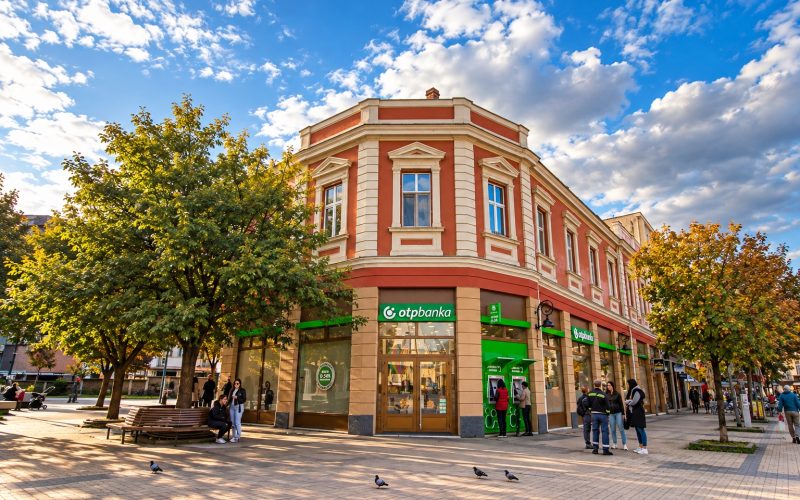
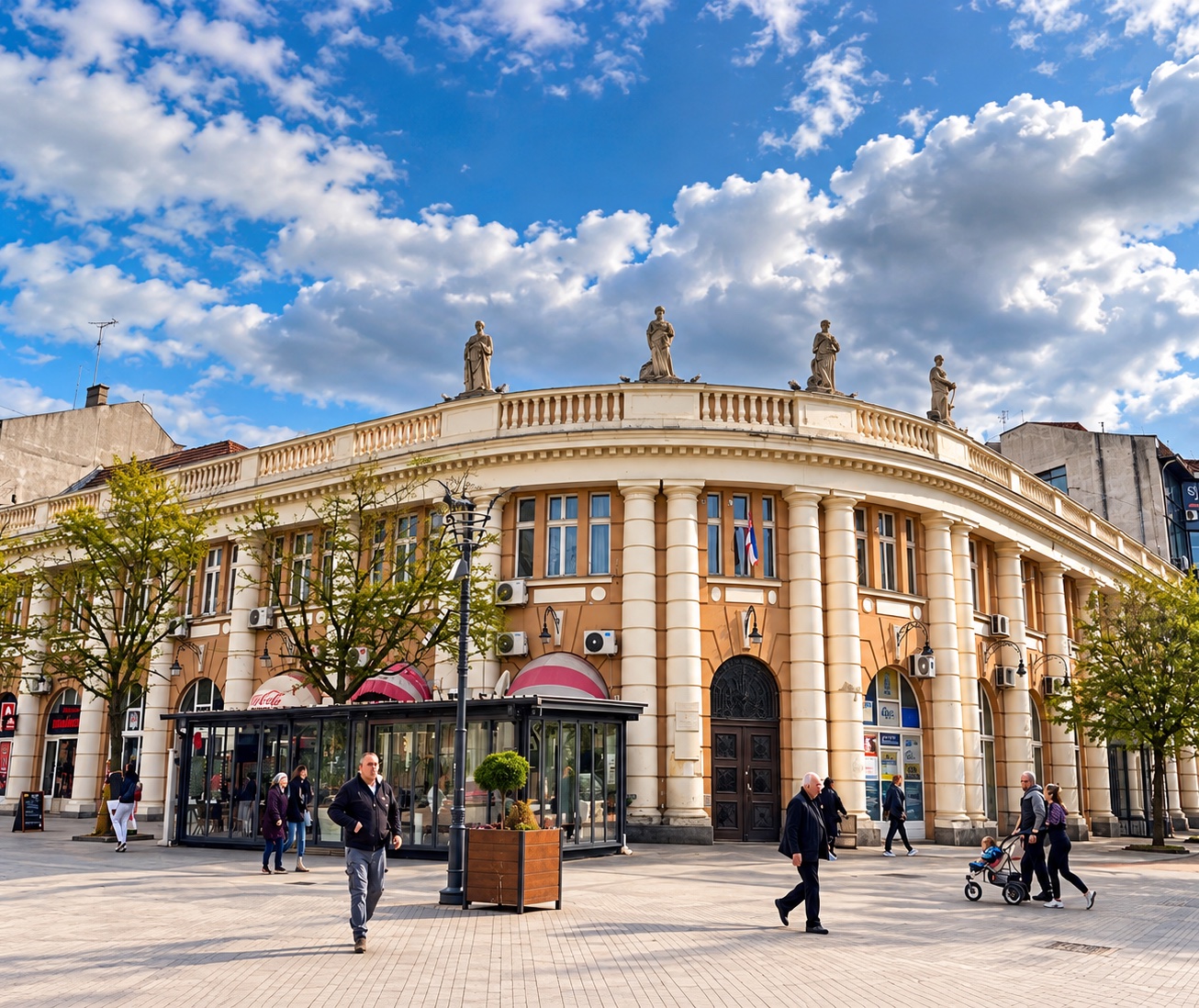
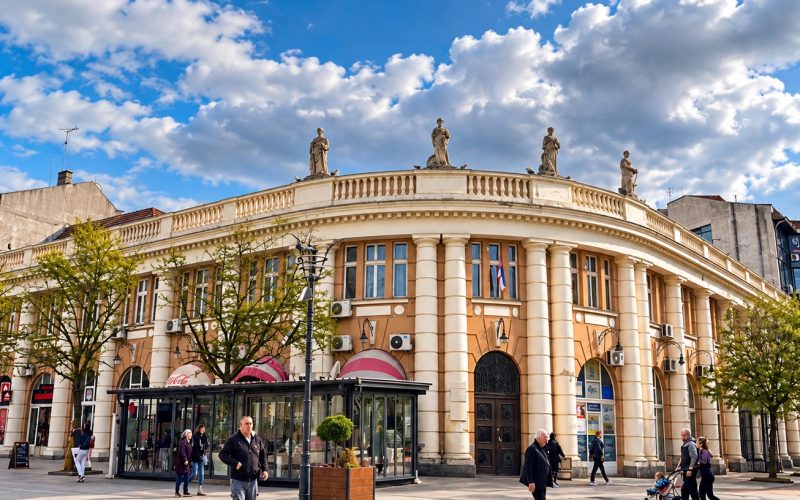
On its south-western side, a row of imposing civic buildings took shape. The Church Municipality Building, erected in 1925, the Old Municipal Hall, built from 1926 to 1928 to a design by the renowned architect Nikolai Krasnov, and the former Hotel “Ninić”, erected in 1928/29 to a design by the engineer Milija Ninić, significantly changed the appearance of the square and contributed to its growth from a bazaar area into an imposing city centre.

The different architectural styles of these buildings did not disrupt the unity of the space. On the contrary, their relationship with the older buildings created a distinctive architectural ensemble that still defines the character of the old town centre.

Memorial to the Fighters of the First World War

Near the Church of St George stands the Memorial to the Fighters of the First World War, unveiled in 1926 in memory of the people of Smederevo who died in the Great War.

The names of the fallen fighters are carved into its marble slabs, and with its position in the very heart of the city the memorial is an important part of the commemorative identity of Trg Republike.

The fountain and life on the city square

A recognisable part of the present-day appearance of Trg Republike is the city fountain, which over time has become one of the favourite meeting and gathering places of the people of Smederevo.

Together with the pedestrian areas, greenery and surrounding buildings, it contributes to the character of the square as a lively public space in which historical heritage is directly interwoven with the everyday life of the city.

The architectural identity of Smederevo

The special value of Trg Republike lies in its many layers. In one place, different phases of the urban development of Smederevo can be traced, from the former Great Market, through the monumental public and religious buildings of the nineteenth century, to the imposing civic architecture of the first half of the twentieth century.

The Church of St George, the former District Prefecture building, the Old Municipal Hall, the Church Municipality Building and the former Hotel “Ninić”, together with other buildings of the old town centre, create the space for which the centre of Smederevo is known.
Explore Trg Republike

Choose a place on the map or in the list.

From Trg Republike through the old town centre

Trg Republike is also a natural starting point for getting to know the historical, cultural and administrative heart of Smederevo. From it, streets and urban spaces lead in different directions, linking some of the most important landmarks, cultural institutions, educational institutions and places of collective memory.

Directly adjoining Trg Republike is Kralja Petra I Street, one of the city’s main promenades, along which the pedestrian zone continues towards the Danube and the Danube Quay. At the very start of the street stands a building from 1942, designed for the former association “Kolo srpskih sestara” by the architect Milica Šterić, while Kralja Petra I No. 2 is now home to the Historical Archives in Smederevo. The street also preserves other significant works of twentieth-century Smederevo architecture and is an important part of the old town centre.

Close to the square are Smederevo Grammar School and Karađorđe’s Mulberry Tree, one of the most important sites associated with the events of the First Serbian Uprising. The area around the square thus links the heritage of different periods, from the beginning of the nineteenth century and the creation of the modern Serbian state to the growth of civic Smederevo and the architecture of the twentieth century.

Not far from the square is Vojvode Đuše Street, another important route through the central urban area. In 2023, a monument was erected there to Aleksandar Deroko, one of the most important Serbian architects of the twentieth century and a figure who left a strong mark on Smederevo. Deroko took part in the reconstruction of the city after the devastating explosion of 5 June 1941, and the Memorial Ossuary with Bell Tower in the Old Cemetery was also built to his design. The monument in Vojvode Đuše Street is the work of the academic sculptor Zoran Kuzmanović.

This route leads on to an important cultural and educational part of the city centre, home to the Smederevo Cultural Centre and Smederevo Public Library, two major institutions of the city’s cultural life.

In the same wider area is Primary School “Dimitrije Davidović”, one of the oldest educational institutions in Smederevo, whose beginnings go back to 1806. Its name preserves the memory of Dimitrije Davidović, journalist, publicist, statesman and author of the Sretenje Constitution of 1835. Davidović spent the last years of his life in Smederevo, where he died in 1838 and where he is buried.

Towards Smederevo Fortress and the Danube riverside stands the Museum in Smederevo, housed in the building of the former Hotel “Jadran”. Between the Museum and the railway station is the Monument “5 June 1941”, erected in 1973 in memory of the victims of the great explosion in Smederevo Fortress. It is the work of the academic sculptor Selimir Jovanović and one of the most important memorials of contemporary Smederevo.

From this part of the town centre, the route continues naturally towards Smederevo Fortress, the most monumental historic monument in Smederevo and one of the greatest achievements of Serbian medieval architecture. It was built in the fifteenth century, in the time of Despot Đurađ Branković, as the fortified capital of the Serbian Despotate. Situated at the confluence of the Jezava and the Danube, with its position, size and preserved walls and towers it is the dominant symbol of the city and one of its most important cultural and historical ensembles.

A distinct ensemble in the wider centre is Memorial Park “Tri heroja”, located opposite the City Administration building. This space preserves the memory of the People’s Heroes of the Smederevo area who died in the Second World War, and nearby there is also the monument to the soldiers who fell during the 1999 NATO aggression.

The wider central area also includes important public and transport points of the city, among them the Smederevo Police Administration and the bus and railway stations. Their proximity further shows that the area around Trg Republike is not only a historical core but also one of the main functional centres of the modern city.

Trg Republike is therefore not an isolated landmark but the central point of a wider town centre, from which a walk can reveal different layers of the past and present-day life of Smederevo, from the time of Karađorđe and Dimitrije Davidović, through the architecture of the nineteenth century and the interwar town, to the reconstruction after 5 June 1941, contemporary cultural institutions, Smederevo Fortress and the Danube.

Trg Republike remains one of the main places for meeting, gathering and city events: a space in which the history of Smederevo is not only preserved but also lived every day.

Gallery

Nearby